The aviation industry is going through a critical energy transition to reduce its emissions. Among the potential solutions, Sustainable Aviation Fuel (SAF) stands out as the most concrete and viable option. But can this fuel truly scale on a global level? And from an investor's perspective, is it a risk or an opportunity?
Achieving a carbon-neutral aviation industry is no longer just an environmental aspiration—it is now a strategic and economic imperative, and a clear policy direction. While electrification and hydrogen propulsion offer promise in the long term to a limited extent due to distance related limitations, low-carbon liquid hydrocarbon fuels such as SAF remain the only practical solution available today. Across the globe—from the United States to Europe, Asia to Turkey—different regions are pursuing diverse strategies supported by a mix of incentives, mandates, funds, and public-private partnerships.
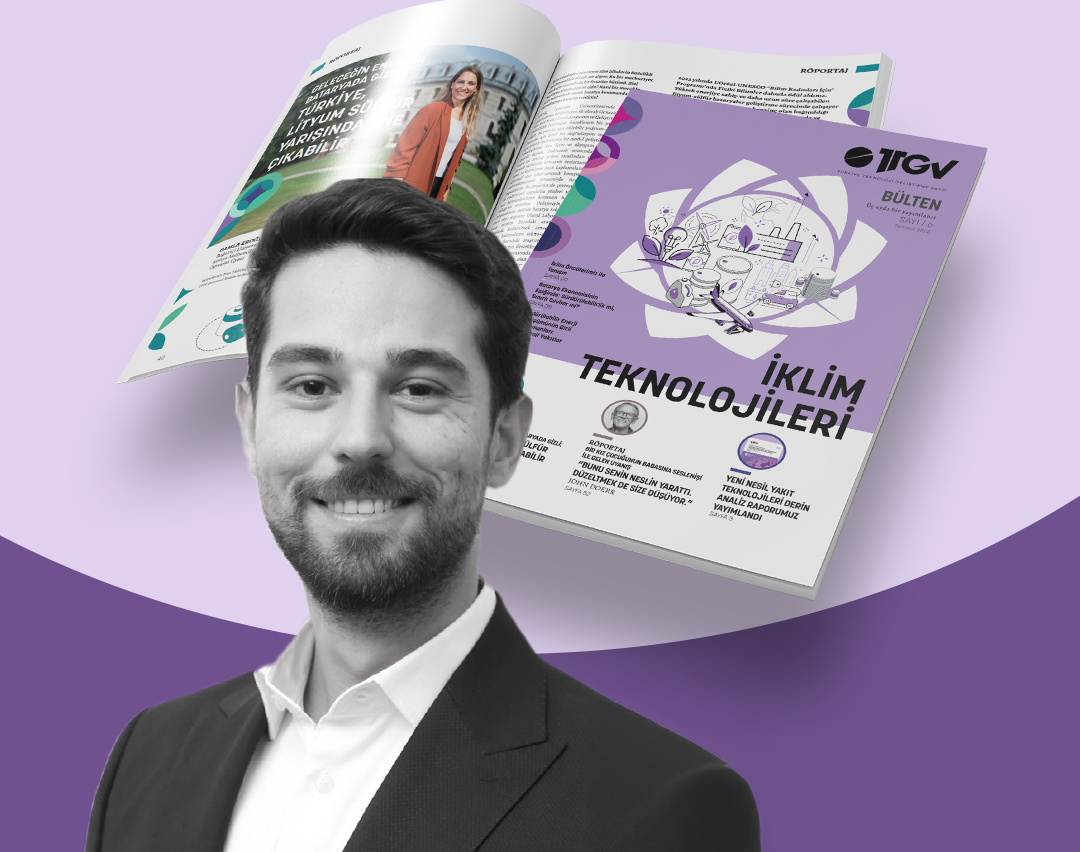
In this in-depth interview, we speak with Yaşar Yetişkin, Senior Manager at ICF, who collaborates with stakeholders across the entire SAF value chain — from governments and airlines to investors, fuel producers, airports, OEMs, and NGOs — to explore the global expansion of SAF, its technological maturity, investment risks, and the crucial role of policy and international cooperation in scaling up sustainable aviation.
Interview by: Esra Yazdıç Demir - TTGV Corporate Communications & Media Manager
In which regions is Sustainable Aviation Fuel (SAF) expanding most rapidly on a global scale, and what are the main economic or political factors influencing this growth?
SAF adoption is expanding all over the world with over three hundred announced facilities, yet it is still an emerging low-carbon technology and cannot scale beyond the “valley of death” without solid financial viability and strong, long-term policy support. United States, the United Kingdom, and the European Union host majority of these facilities, given the strong policy support for SAF. In the U.S., the rapid pace of SAF development can largely be attributed to the longstanding support mechanisms for biofuels. These federal and state level incentives, initially designed for ground transport fuels, have been successfully utilized to support SAF. Combined with the federal RFS program, California’s Low Carbon Fuel Standard (LCFS) have made SAF economically attractive, positioning the state as a global hub for SAF activity. The new administration brought uncertainties regarding the continuity of policy support for SAF, but the latest updates regarding the likely extension of Clean Fuels Production Credit (CFPC - 45Z) and conditional approval of 3bn USD grant allocation for two SAF facilities can be considered as strong positive signals for SAF.
In the UK and EU, the driving force has been mainly SAF blending mandates. Here, the ambition to lead the global fight against climate change has played a major role. SAF blending mandates such as ReFuelEU and the UK SAF mandate send strong regulatory demand signals to the market. Mandates have started as of 1st January 2025 with 2% SAF blending obligation. Therefore we have been seeing quite a lot of SAF activity in the EU and the UK ahead of this period.
These regions can be considered part of the "first wave" of SAF growth. However, activity is no longer limited to the Global North. Japan, Canada, and Australia are also launching SAF-related initiatives. Meanwhile, countries like China, India, and some South American nations are starting to engage in pilot projects and policy drafting. Turkey, in particular, is seeing promising developments. The draft SAF regulation prepared by the Directorate General of Civil Aviation is a clear sign of strategic intent.
Ultimately, we understand that mandates or incentives are not enough in isolation to scale up an emerging low carbon technology like SAF. We need to utilize carrots and stick together with a hybrid policy approach. The UK is a great example of how SAF policies can continue to evolve to meet emerging market dynamics: the blending mandate and the Advanced Fuels Fund ignited market activity, and the recently proposed Revenue Certainty Mechanism, based on a guaranteed strike-price model to de-risk revenue for UK producers, now aims to accelerate domestic production and bridge the supply-demand gap.
Clear policy direction with long term certainty (both supply and demand side), financial incentives, and cross-sector coordination has been the driver for SAF scale ups so far. Where these elements come together, investors gain confidence and production capacity grows to an extent. The global activity and the scale of the investments we are observing can be considered as evidence that, with the right policy and finance push, SAF is no longer just a "future fuel" - it is a well-recognized, practical and scalable decarbonization tool for aviation today.
From an investor's perspective, what are the biggest risks and opportunities in SAF production and infrastructure? How do you view the role of technology maturity and regulation?
SAF investments could come with meaningful return potential, but they would also carry considerable risk. The risk/return profile is driven primarily by the technology maturity, feedstock availability, regulatory landscape and the market dynamics. As of now, only HEFA (Hydroprocessed Esters and Fatty Acids) technology is considered commercially mature, which we have been utilizing for decades for renewable diesel production already, making it a relatively low-risk technology. However, even HEFA has its challenges, particularly around feedstock availability. Since it relies on fats, oils and greases, feedstock constraints can hinder future scalability. That said, new opportunities are emerging - such as the use of cover crops that don’t compete with food production - to diversify and expand HEFA feedstock supply.
Technologies beyond HEFA, such as Fischer-Tropsch (FT), Alcohol-to-Jet (AtJ), and Power-to-Liquid (PtL), are still considered high-risk. Most of the individual process units involved in these pathways are proven, yet their integration and utilization for large scale SAF production is new to us. In fact, some early efforts to scale up FT SAF pathway have already faced significant challenges. Companies like Fulcrum BioEnergy and Velocys, once seen as pioneers, have been struggling due to complex technical and financial setbacks. Even promising facilities like Lanzajet’s Freedom Pines site have yet to begin actual SAF production in large quantities. From an independent engineer’s perspective, the risk is real, and several years of successful operation would be required before that risk is considered meaningfully reduced.
To mitigate these risks, long-term offtake agreements are essential. Especially when structured as "take-or-pay" contracts, they provide predictable cash flows that make projects more bankable. In such contracts, the financial credibility of the offtaker matters a lot. Airlines generally do not enjoy top-tier credit ratings, as they operate on thin margins. However some flag carriers or major fuel suppliers tend to have stronger ratings, which can be more attractive to investors. The involvement of energy majors and fuel providers in offtake agreements as fuel suppliers further de-risks investments and unlocks more favourable financing conditions.
Once first-of-a-kind (FOAK) facilities come online and demonstrate consistent performance, the cost of capital is expected to drop, making subsequent projects less risky and more affordable. Regulatory support also plays a crucial role. Without a form of policies - mandates, price support schemes, public funding etc. - SAF is unlikely to compete on its own. Investors look for more than just technology. They evaluate long-term policy certainty, regulatory alignment, and the presence of risk-sharing models.
Compared to hydrogen or electric propulsion systems, how feasible are low carbon liquid hydrocarbon fuel-based solutions in the medium and long term?
Electric aircraft, hydrogen propulsion systems, and low carbon liquid hydrocarbon fuel-based alternatives like SAF are expected to play a role in decarbonizing the aviation industry, together. Among these, SAF stands out as the most practical and scalable option, both today and in the foreseeable future. The main reason is that it is chemically identical to fossil jet fuel, so it can be used as a drop in fuel with limited to no distribution in downstream logistics activities.
Electric aircraft are promising for short-haul, low-capacity routes. However, due to battery energy density limitations, they remain unsuitable for medium- to long-haul commercial aviation. While progress continues in urban air mobility and regional electric flight, batteries are far from replacing jet fuel in larger aircraft.
Hydrogen appears more viable for longer-range flights but faces major infrastructure and integration hurdles. Storing and transporting liquid hydrogen requires extensive redesigns of aircraft and airport refueling systems. The investment and engineering requirements are massive. Moreover, the momentum around hydrogen in aviation has recently slowed. Airbus has delayed its hydrogen aircraft target beyond 2035, and a notable hydrogen aircraft startup recently went bankrupt. Hydrogen’s contribution to aviation decarbonization by 2050 has also been reduced in some latest projections. However, its non-CO2 benefits are well recognized as it is a truly net zero solution.
By contrast, SAF can be blended into existing jet fuel and used in today’s aircraft and fueling systems without any modifications. This "drop-in" compatibility makes it uniquely suited for immediate deployment across global fleets. More importantly, it is currently the only decarbonization solution that works for long-haul and transcontinental flights.
Beyond conventional “biogenic” SAF, synthetic fuels are also emerging. Electrofuels, PtL SAF, or eSAF, use “green” hydrogen and captured CO₂ to create a zero-carbon jet fuel. These solutions represent the future of SAF, allowing the aviation sector to integrate renewable energy and decarbonize deeply without overhauling infrastructure. We also see some hydrogen projects switching to eSAF project, given the strong economic and policy activity around SAF, and eSAF’s ability to provide a faster route for commercialization.
In short, while electric and hydrogen technologies will likely play some/limited role in specific market segments, SAF remains the only scalable, infrastructure-ready, and technically viable solution for mainstream commercial aviation.
How effective is the collaboration between international aviation authorities and the private sector in scaling up SAF use? How do these partnerships shape investment decisions?
Scaling up SAF requires a coordinated approach that aligns policy, technology, and economic viability. Achieving this goal requires a highly collaborative, multi-stakeholder effort, with every segment of the value chain working together. International aviation bodies, national regulators, airlines, airports, producers, academia and investors all have interdependent roles to play. Collaboration between these actors is essential not just for technical deployment, but also for unlocking financing and reducing market uncertainty.
ICAO’s CORSIA scheme has been instrumental in placing SAF on the global agenda as a recognized carbon reduction tool. However, CORSIA alone is not enough. National mandates, regional incentives, and private-sector commitment are all necessary to build a functioning market. Increasingly, airlines are entering into long-term offtake agreements, providing demand certainty for producers. Airports, too, are stepping in—not just as infrastructure providers, but as active investors.
For example, Luxembourg Airport invested directly in an eSAF producer, while London Heathrow developed its own SAF incentive program and allocated well over 100 million GBP support for SAF so far. These cases show that airports too are embracing a strategic role in the aviation energy transition, as they understand the key role of SAF in ensuring the low carbon growth of the aviation industry. In Türkiye, promising initiatives are also underway. The Türkiye Sustainable Aviation Alliance (TSAA) brings together key players such as Turkish Airlines, Pegasus Airlines, SOCAR, TUPRAS, IGA and many more. The Alliance facilitates coordination on policy, roadmaps, and potential SAF projects, and is a great example to collaborative efforts towards scaling up SAF. The SAF letter of intent between TUPRAS and Turkish Airlines is another strong example of effective collaboration between an airline and a fuel producer.
These partnerships help distribute investment risk and align technical and financial planning. In capital-intensive sectors like SAF, joint ventures and consortia reduce entry barriers and increase bankability. As a result, investors are more willing to support projects when they see alignment between government priorities and private-sector capabilities.
To conclude, SAF will only scale at the pace required if public and private actors collaborate under a shared vision. It’s not just about fuel—it’s about creating a new industrial ecosystem, and no single player can build it alone.